A property with traffic, and a ceiling.
The Boutique Island Resort is one of the region's most storied boutique resorts. Like most historic properties, it had a loyal returning guest base, strong brand recognition, and heavy dependence on OTAs and paid search to fill its shoulder-season inventory.
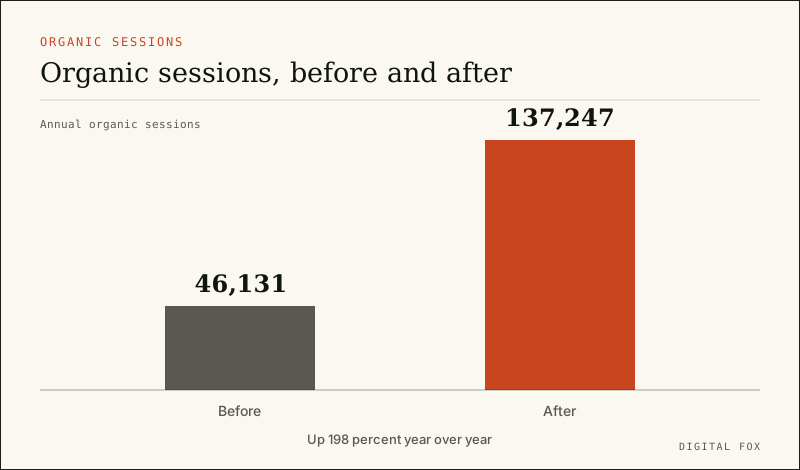
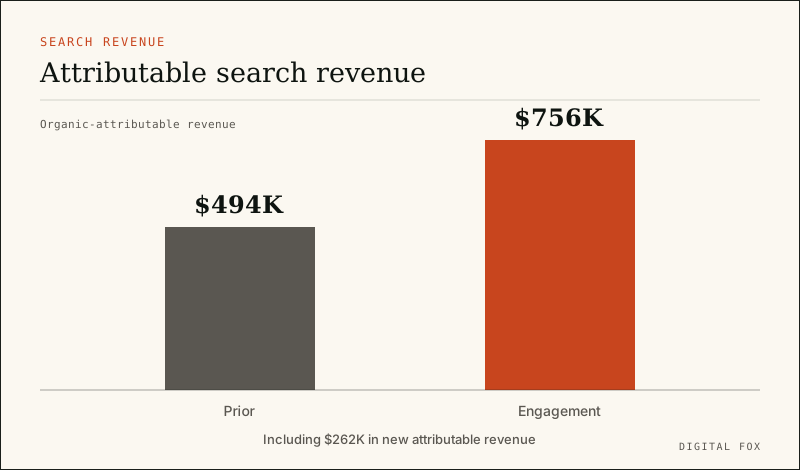
The site converted well when visitors arrived. But Organic Search, the channel that should have been delivering high-intent travelers researching island trips, was punching far below its potential. In the prior-year period, Organic generated just 46,131 sessions and $494K in revenue, well behind Paid Search in volume and revenue share.
The opportunity: The island attracts roughly 1 million visitors per year, and each one starts their trip with a Google search. Whoever ranks first for "best hotel on [island]," "[island] romantic getaway," or "things to do [island] in October" captures the booking window.
What we did: domain consolidation, content at scale, technical rebuild.
The program ran on three parallel workstreams.
01 · Domain migration & consolidation
Consolidated to a unified domain structure in mid-2025. The new official site architecture captured organic traffic at scale that simply hadn't existed before, with a single migrated page alone generating 207,000+ views (up from zero in the prior year).
02 · Long-form content production: 369 articles
Built an editorial engine targeting the full spectrum of regional travel intent: seasonal guides, event coverage, destination storytelling, and experiential content. Each article ran 5,000–8,000 words and was structured for both Google's ranking algorithm and AI Overview extraction.
03 · Technical SEO & internal architecture
Implemented schema markup (Hotel, Offer, FAQPage), restructured H1/H2 hierarchy, built internal link architecture between pillar content and booking pages, and optimized Core Web Vitals across the site.
Where the growth actually came from.
The channel-level data tells the full story. Organic Search sessions nearly tripled. Partner and metasearch channels amplified the lift. Paid Search sessions held flat while Paid Search revenue rose, evidence that organic authority was raising performance across every channel.
| Channel | Sessions YoY | Revenue YoY | Revenue (2025–26) |
|---|---|---|---|
| Organic Search | +198% | +53% | $755,761 |
| Google CPC | Flat | +35.5% | $648,382 |
| Direct | Steady | +12.4% | $502,286 |
| Bing Organic | +177% | +77% | $87,067 |
| Bookdirect Referral | +120% | +270% | $60,176 |
| Triptease Metasearch | +112% | +64% | $35,612 |
Source: GA4, Jun 1 2025 – May 5 2026 vs. Jun 1 2024 – May 5 2025.
Paid Search sessions held flat, yet Paid Search revenue rose 35.5%. Lower-funnel paid campaigns converted better because organic authority was doing the awareness and consideration work upstream. Partner referrals amplified in lockstep: Bookdirect revenue up 270% and Triptease up 64%, while Bing Organic grew sessions 177% and revenue 77%. The entire ecosystem lifted together.
Four findings that explain the growth.
Organic Search became the #1 traffic source.
Sessions nearly tripled (+198%) driven by domain migration, improved SEO structure, and the blog content programme. 369 articles indexed, each one a permanent digital asset generating traffic 24/7.
Revenue grew without more paid traffic.
Google CPC sessions held flat, but CPC revenue rose +35.5%. Organic added $262K in new attributable revenue on top, a rare pattern where spend efficiency and total revenue both improve at once.
Partner channels amplified.
Triptease Meta revenue up +64%. Bookdirect referral revenue up +270%. Bing organic revenue up +77% on sessions up +177%. When domain authority rises, every downstream partner performs better; the rising tide is real and measurable.
The content flywheel proved out.
Blog launched in 2025 → 108K+ blog views → organic sessions nearly tripled → $756K attributable organic revenue in 11 months. The article-to-revenue pipeline is now a repeatable engine.
And the $800K we flagged for year two.
A complete case study shows what's working and where the next increment lives. The funnel analysis mapped a significant upside:
Demand into the booking engine grew, and the funnel can capture more of it.
Booking Engine entrances grew (+9.1%) and Add-to-Cart grew (+4.3%), so more qualified demand is flowing into the engine than ever before. Funnel analysis mapped an estimated $800K+ in additional recoverable bookings: the single highest-leverage revenue project identified for the next engagement cycle.
This is the mark of a program worth renewing: organic growth compounding, and a specific, measurable path to the next increment.
The takeaway.
Eleven months. 369 indexed articles. Organic sessions nearly tripled. $262K in new attributable organic revenue. Paid traffic held flat, paid revenue increased. Partner channels amplified in lockstep. Total site revenue up 25.4% year over year. Along the way the site tracked 3,183 room purchases, with cottage and specialty categories growing purchases +100% on revenue +71%.
The core insight: organic search isn't a line item, it's the foundation that makes every other channel more efficient. When the content flywheel is turning, paid works harder, partners convert better, direct traffic compounds, and the property stops renting demand it should own.
Every article published is still earning rankings today. That's what "permanent asset" actually means.